
Share this article
22 Jan 2025
Good Design Strategy is impossible to avoid

Written by:
Tomer Romano
After enough years working with companies of every size, you develop a sixth sense. You walk into a kickoff meeting, look at who's in the room and how they talk about design, and you already sense how the project is going to go.
If no designer was invited to the kickoff (that company… doesn't have one?), that tells you something. If there is no designer and someone says "we'll make it look nice at the end," that tells you a lot more. If the CEO opens the meeting with a user research finding, you're in a different world entirely.
That sense & feeling has a name. It's called design maturity, and there's a proper scale for it. The framework below builds on the Nielsen Norman Group's UX Maturity Model, first sketched out by Jakob Nielsen back in 2006 and refined ever since. What follows is the condensed five-stage version, with real companies attached, the telltale signs of each stage, and what moving up actually takes.
Why high ranked-companies create iconic brands
Before the stages, a short business case, because "design matters" is easy to nod at and easy to ignore:
McKinsey tracked 300 publicly listed companies over five years for their Business Value of Design study. The companies in the top quartile of their design index grew revenues 32 percentage points faster than their industry peers, and delivered 56 points higher total returns to shareholders. Not 32 percent faster. 32 percentage points faster.
The study found the biggest gains came from companies that treated design as a company-wide capability, not a department. In other words, the payoff isn't correlated with how many designers you employ; It's correlated with your maturity stage.
Stage 1: Unaware
Design isn't a thing here. Nobody in the building sees a connection between how something looks and works and how much money it makes. Design decisions happen by accident, made by whoever touched the file last: a developer picking a default blue, a founder centering a logo in PowerPoint.
How to recognize it?
There are no designers on payroll, and nobody thinks that's strange
"Design" means logos and colors, nothing else
The product's interface has never been tested with an actual user
When something looks off, the fix is "ask the intern who's good with Canva"
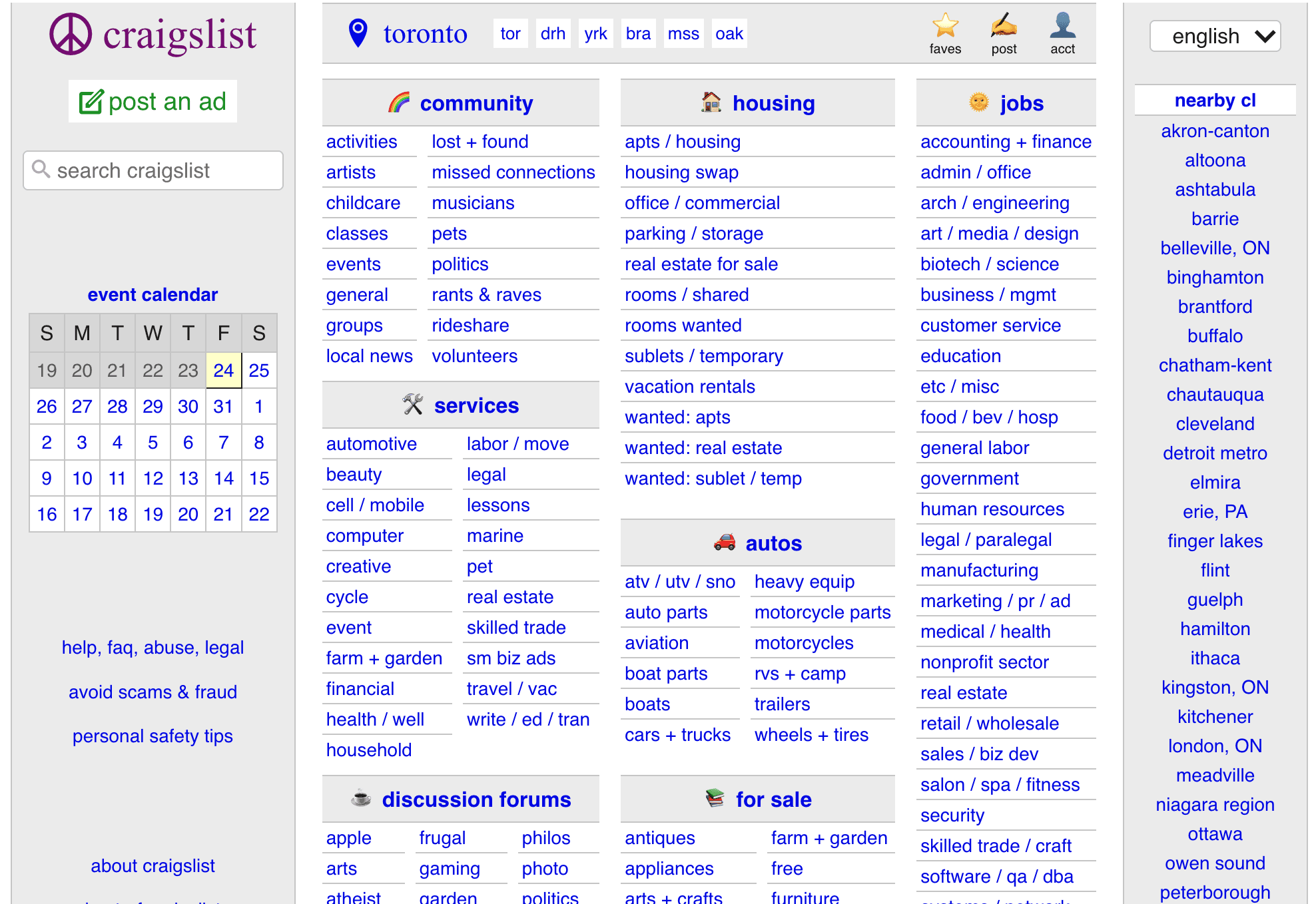
Craigslist, gloriously untouched since 1999. And to be fair, it works for them: a two-sided marketplace with total category dominance can coast on network effects for decades. That's exactly the trap. Stage 1 companies point at Craigslist as proof that design doesn't matter, forgetting that Craigslist's moat is its inventory, not its interface, and forgetting how much of Craigslist's lunch got eaten by better-designed slices like Airbnb (rooms), Zillow (real estate), and Tinder (personals).
What it costs
invisible losses. Users churn and nobody knows why, because nobody's asking. The company competes purely on price or features, which are the two most expensive ways to compete.
Moving up
one person with authority has to connect a business problem to a design cause. That's it. Stage 1 to stage 2 doesn't take a budget; it takes a moment of attribution: "we lose half our signups on this form."
Stage 2: Limited
Design exists, but only where investors and customers can see it. The marketing site gets a facelift, the pitch deck gets an agency, and the actual product gets whatever the developers had time for. Design is a coat of paint, applied at the end, project by project.
How to recognize it?
The homepage and the product look like they belong to two different companies
Designers are briefed after the requirements are frozen ("make this look good")
There's design budget for campaigns, but not for the checkout flow
Every design engagement is a one-off; nothing accumulates
Ticketmaster. Polished campaign pages and artist partnerships on top of a purchase experience so hostile it reached a US Senate hearing after the 2022 Taylor Swift on-sale collapse. Millions of fans in queues that lied about their position, error messages that blamed the users, a checkout that fought you at every step. The gap between Ticketmaster's marketing surface and its product surface is the purest stage 2 artifact in the wild.
What it costs
the gap itself becomes the brand. When your advertising promises one experience and your product delivers another, users don't remember the ad. They remember the betrayal, and they narrate it on social media.
Moving up
stop buying design by the project and hire it into the building. The transition to stage 3 happens when someone owns design continuity: the same design brain seeing the marketing site, the onboarding, and the product, and being allowed to say "these don't match."
Stage 3: Emergent
The company genuinely believes in design now. There are designers on staff, maybe even a design lead. What it doesn't have yet is the muscle: processes are inconsistent, designers get pulled in too late, every team reinvents its own workflow, and design quality depends entirely on which designer you happened to get.
How to recognize it?
Designers exist but are outnumbered 20-to-1 or worse, and spread thin across teams
Some projects run discovery and research; others skip straight to pixels
There's a style guide somewhere, and at least three teams ignore it
Design reviews happen, but shipping pressure overrides them every time
IBM, starting in 2012. When Phil Gilbert took over IBM's design program, the company had roughly one designer for every 72 engineers. What followed became the Harvard Business School case study on design transformation: IBM hired around 1,600 formally trained designers, opened 44 design studios across more than 20 countries, built a Design Program Office to drive the change, and re-trained over a hundred thousand employees in design thinking. IBM understood that believing in design and being good at design are separated by years of deliberate, funded, organizational work. Stage 3 is where that work happens, and it's uncomfortable the whole way through.
What it costs
burnout and inconsistency. Stage 3 is where good designers quit, because they were hired to do design and spend their days fighting for the right to do it. It's also where leadership gets impatient, because the design investment is real but the results are uneven.
Moving up
process, not headcount. Stage 3 becomes stage 4 when design activities stop being optional: research happens before requirements, design reviews have teeth, and a design system makes the good path the easy path.
Stage 4: Structured
Design is part of the strategy, with real processes, tools, and a seat at the table. Nobody debates whether research should happen; it's scheduled. The design system isn't a PDF nobody opens; it's the shared language of product development.
How to recognize it?
Design has representation where decisions get made, not just where they get executed
A living design system keeps every team coherent without slowing them down
Researchers are embedded in product teams, not summoned for emergencies
Design quality survives personnel changes, because it lives in the process
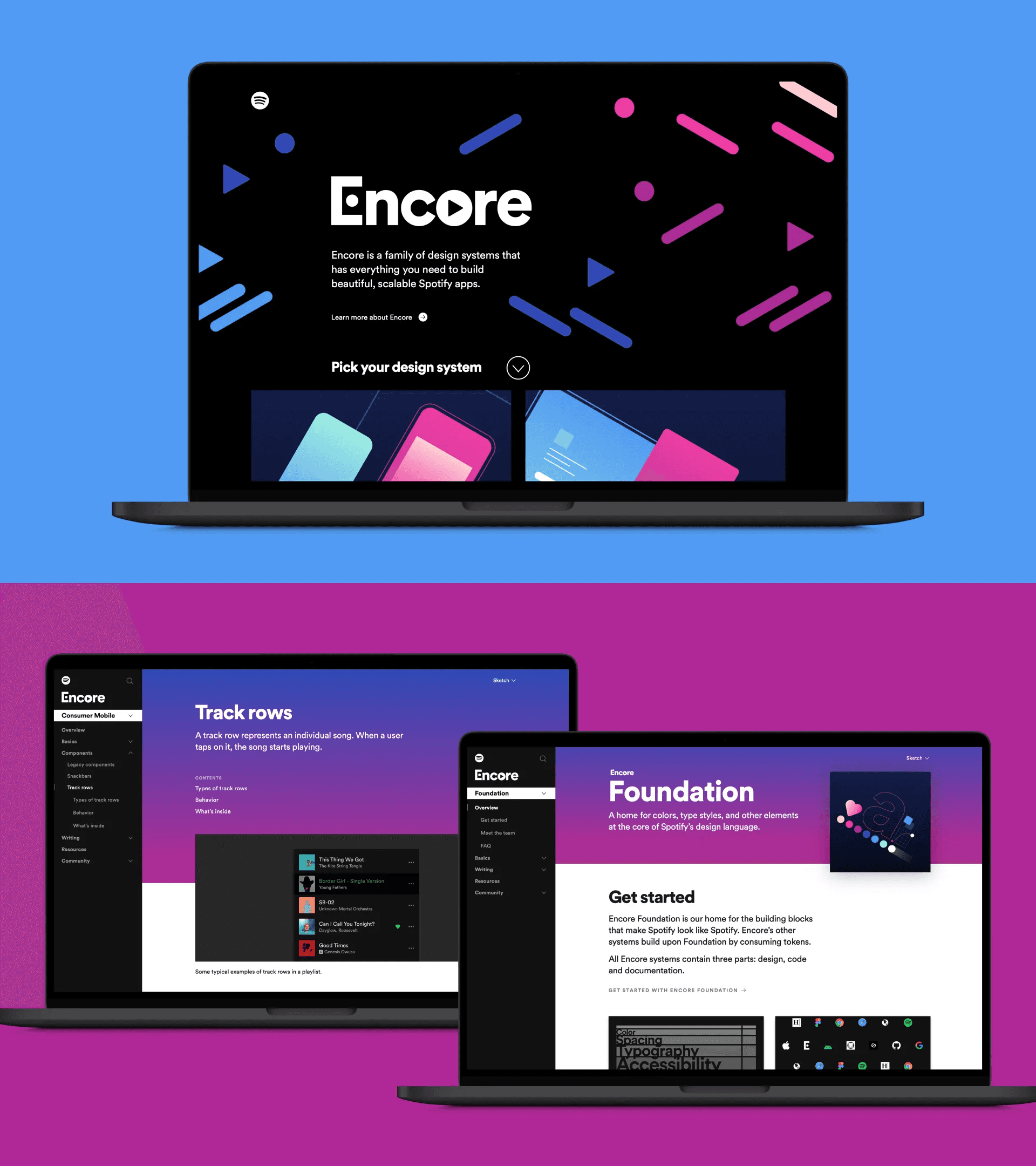
Spotify. Their design system, Encore, launched in 2019 as a deliberate "system of systems": shared foundations of design decisions flowing into platform-specific subsystems, so a Spotify screen feels like Spotify whether it's on your phone, your TV, or your car (Figma wrote up how it works, and Spotify's own team told the origin story). The tell is in the architecture: Spotify didn't build a component library, they designed how design itself scales across an organization of autonomous squads. That's stage 4 thinking.
What it costs
honestly, not much, which is why it's a great place to be. The main risk is complacency: structure can calcify into bureaucracy, and a design system can become a ceiling instead of a floor.
Moving up
the last jump is the hardest, because it isn't about design at all. It's about power. Stage 4 becomes stage 5 when user insight starts deciding what gets built, not just how it looks and feels once someone else has decided.
Stage 5: Design-Driven
Design doesn't support the strategy. Design is the strategy. User research is a primary input to the roadmap. The company expands into new markets based on what it learns about human behavior, and the org chart shows it.
How to recognize it?
Founders or C-level leaders come from design, or treat research findings as board-level material
"What did users tell us?" is asked before "what did the competitor ship?"
Design metrics (activation, task success, satisfaction) sit next to revenue on executive dashboards
The company's biggest bets started as user insights, and everyone can name them
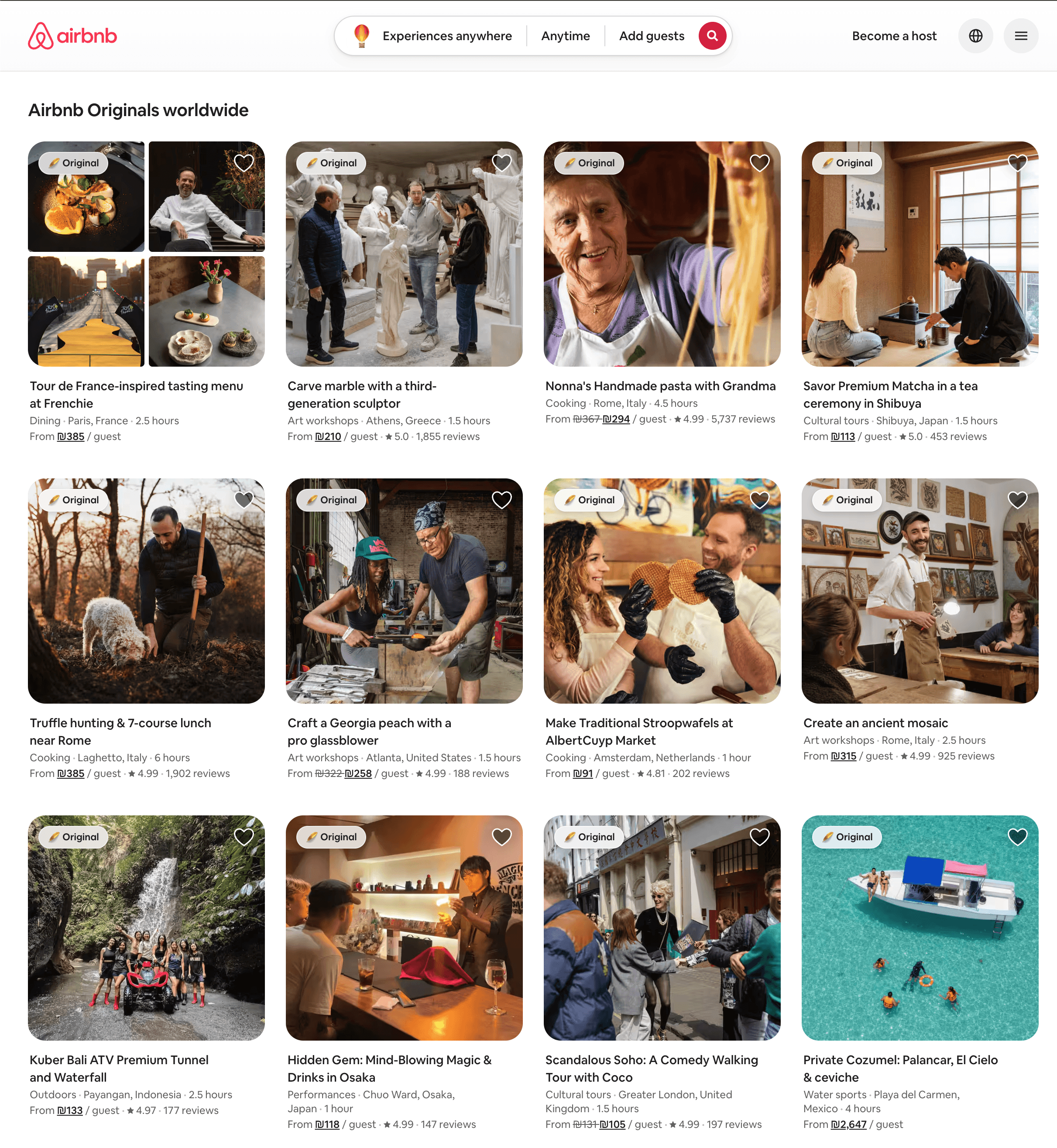
Airbnb, founded by two designers from the Rhode Island School of Design. The famous stories are all research stories: Brian Chesky and Joe Gebbia flying to New York in the early days to photograph hosts' apartments themselves, because they'd learned that bad photos, not bad inventory, were killing bookings. Storyboarding the entire guest journey frame by frame, Disney-style, to find the moments that mattered. Airbnb doesn't use design to present its strategy. Its strategy comes out of design work.
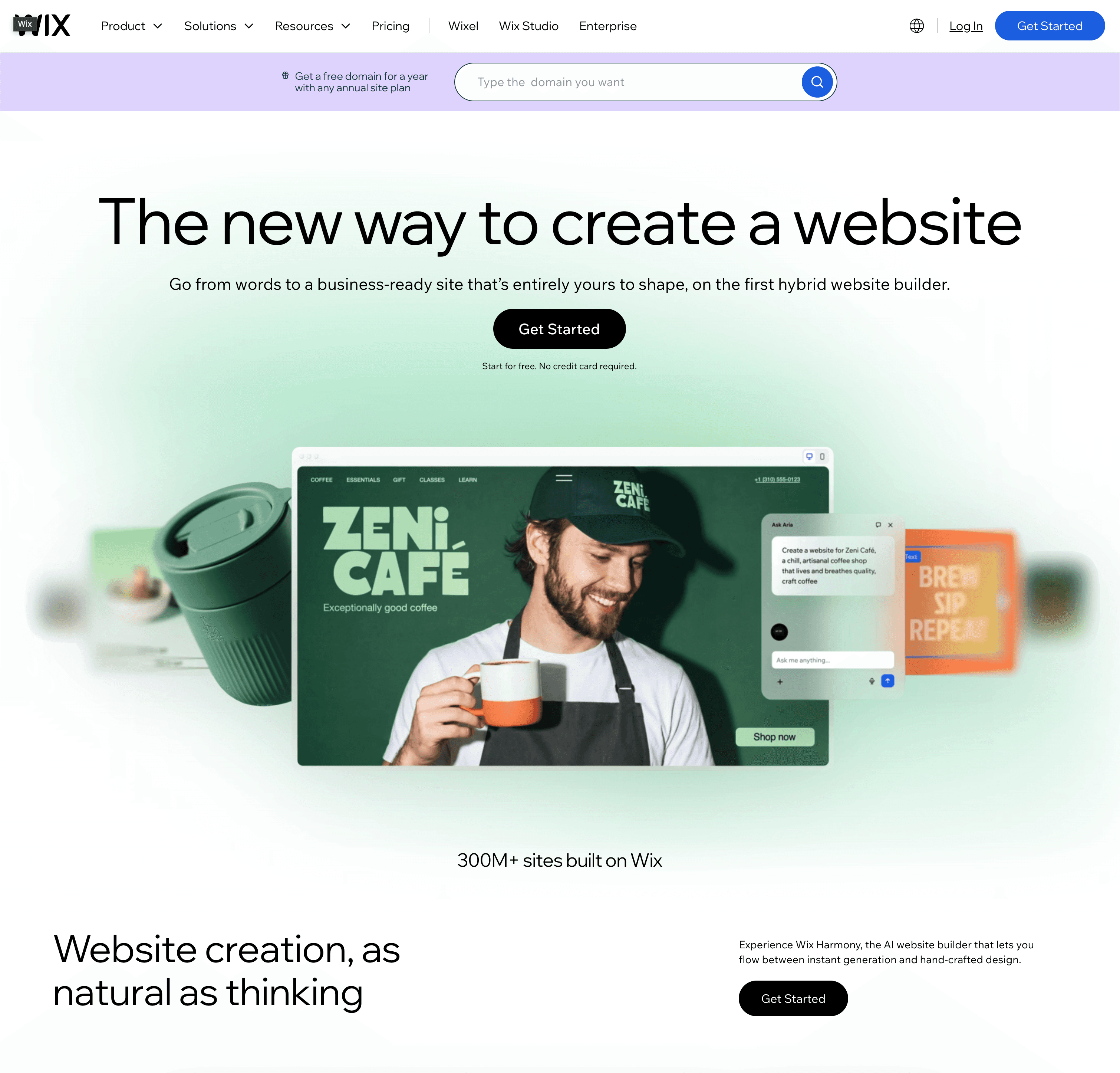
Closer to home, two Israeli companies live at this stage too. Wix is the cleanest case there is, because design literally is the product: the company's entire bet was that anyone should be able to produce a professionally designed website, and every product decision since flows from that insight.
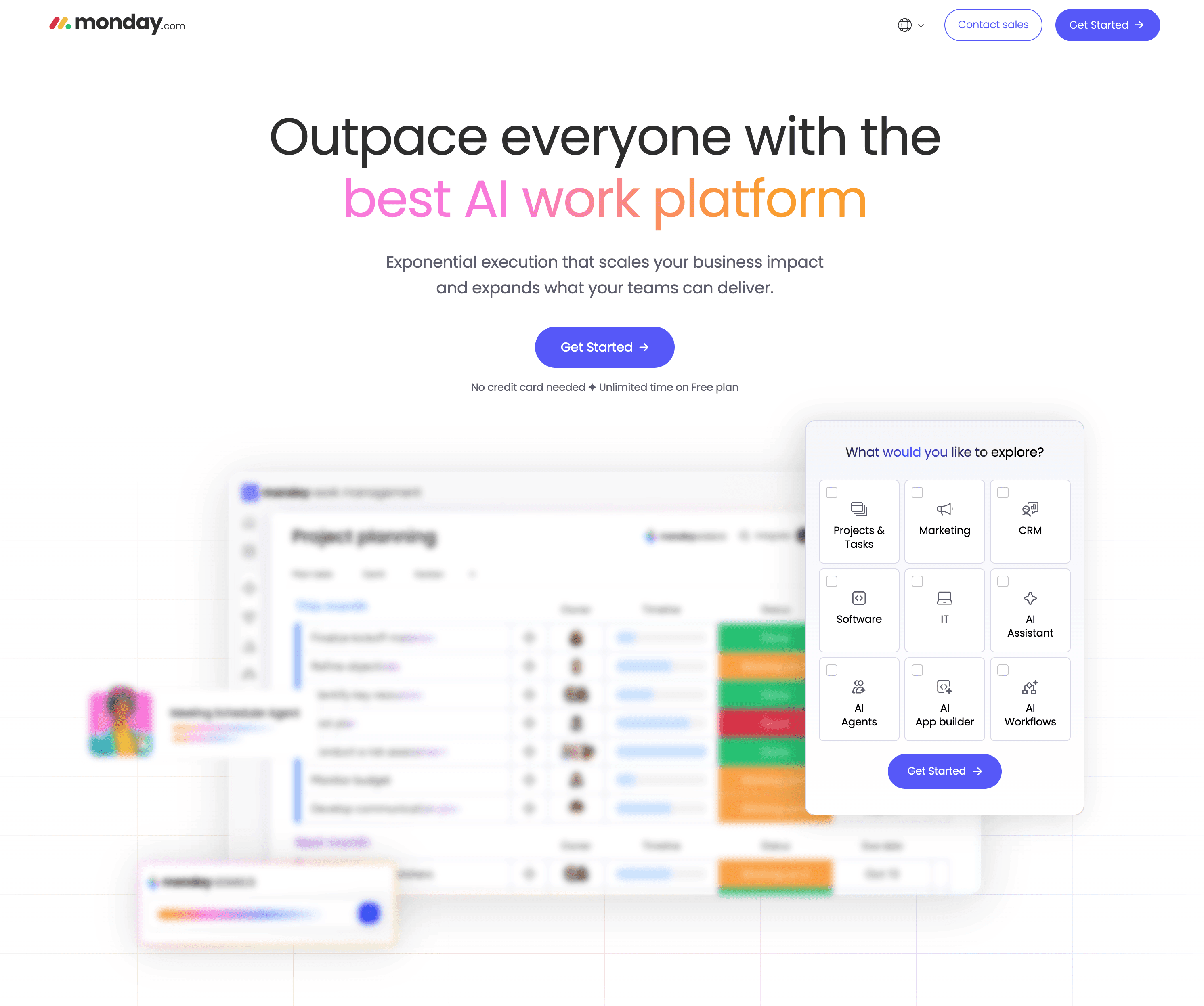
Monday.com entered the most crowded software category imaginable (work management) and won market share largely on design: a visual, colorful, human product in a sea of gray enterprise tools, backed by an in-house creative team whose ads are studied by performance marketers everywhere. In both companies, design isn't a department that supports the strategy. It's the reason the strategy works.
What it costs
nothing, but it demands a tolerance for slow answers. Research-driven bets take longer to form than competitor-copying bets. Stage 5 companies win because they consistently know something about their users that nobody else does, and that knowledge compounds.
Truth to be told - most readers are working in type 2 companies.
We see it over and over: most companies rate themselves a 4. Their users would say 2.
The gap is systematic, and it has a simple cause: leadership evaluates design by the artifacts they see (the brand refresh, the new site, the polished deck), while users evaluate design by the experience they get (the signup flow, the error message, the invoice). Artifacts are stage 2 evidence. Experience is stage 4 evidence. A company can produce beautiful artifacts for years without the experience ever improving.
That gap is where budgets get burned. It's why rebrands don't move the needle, why "we redesigned the app" doesn't change retention, and why great designers keep leaving. You can't fix a maturity problem with a Dribbble-worthy deliverable.
Self-Diagnostic
Answer these honestly, and the scale places you:
When does a designer first see a new initiative?
At the idea stage (4-5), after requirements (3), after development (2), never (1).Where does design report?
To the C-suite or a design executive (4-5), to product (3-4), to marketing (2), to nobody (1).When did someone with budget authority last watch a user struggle with your product?
This quarter (4-5), this year (3), "we have analytics" (2), never (1).If your best designer quit tomorrow, would design quality survive?
Yes, it's in the process (4-5), partially (3), no (1-2).Can you name a roadmap item that exists because of a user insight?
Several (5), one or two (4), we plan to (3), no (1-2).
Score yourself on the pattern, not the best answer. And then, if you're brave, ask five of your users the same questions about the experience they get. The distance between the two scores is your real project.
Moving Up Is Different Work at Every Stage
moving up even one stage changes everything, and none of it requires an IBM-sized budget. But each jump is a different kind of work, and treating them the same is why most maturity efforts stall:
1 → 2 is a realization.
Connect one business loss to one design cause, in front of someone with authority.2 → 3 is a decision.
Bring design in-house, or into a continuous partnership, and give it continuity across projects.3 → 4 is a process.
Make research and design review non-optional, and build the system that makes consistency cheaper than chaos.4 → 5 is a power shift.
Let user insight set the roadmap, not just polish it.
Notice that only one of these four is about hiring, and none of them is about talent.
Maturity is an organizational property. You can't buy it; you build it, deliberately, one stage at a time.
So, Which Stage Are You at?
Reading where a company actually sits on this scale, and building the path up, is exactly the kind of work we do at Romano Agency. If you suspect there's a gap between the stage you claim and the stage your users experience, let's talk.